Intellicite Labs – Origin Story (2023)
- Melinda Chu
- Mar 24
- 2 min read

Intellicite Labs traces its origins back to late 2023, before the current wave of large language model–driven systems had fully taken shape. In November 2023, Dr. Melinda B. Chu developed and documented an early architecture for what would later become known as an “autonomous scientist” system—an integrated, multi-model framework designed to emulate how real scientific discovery occurs across domains. This work was formalized in a USPTO provisional filing and submitted the following day as part of a DARPA FoundSci proposal.

At the time, most AI approaches to drug discovery and scientific research were fragmented—focused on narrow tasks such as protein binding, literature mining, or simulation. The core insight behind the 2023 system was that scientific discovery is inherently multi-modal and iterative, requiring coordination between different forms of expertise rather than a single model.
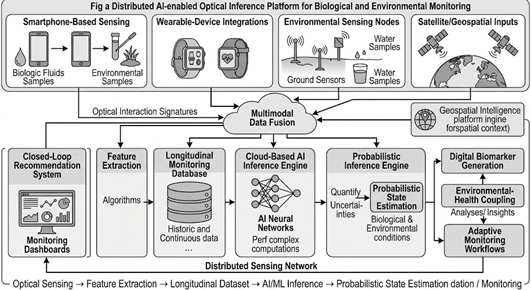
The proposed system introduced a heterogeneous, multi-model architecture, where distinct computational components—each representing a specialized “scientific expert”—interacted through orchestrated workflows. These components included:
genomic and molecular analysis
literature mining and knowledge extraction
simulation and screening systems
clinical and real-world data interpretation
All coordinated through a unifying framework capable of generating hypotheses, designing experiments, and refining outputs through feedback loops.
This approach differed fundamentally from both traditional pipelines and later LLM-centric systems. Rather than relying on a single model to generate outputs, it emphasized:
composability across models
closed-loop reasoning and refinement
integration of real-world and experimental data
evaluation of novelty, utility, and creativity
Notably, the DARPA submission described an end-to-end autonomous scientist workflow, integrating diverse datasets and algorithms into a unified system capable of hypothesis generation, validation planning, and iterative improvement.
While the initial patent process encountered administrative complications, the underlying architecture continued to evolve through subsequent filings and implementations. Over time, this early framework expanded beyond biodefense and drug discovery into a broader platform vision:
systems that integrate AI, experimental data, and real-world validation into closed-loop discovery pipelines.
This evolution ultimately led to the formation of Intellicite Labs, focused on applying these principles to pharmaceutical research, translational science, and AI-driven discovery systems.
Today, the original 2023 insight remains central:
breakthrough discovery does not emerge from a single model, but from the interaction of many systems, continuously tested against reality.


Comments