MMGPE: A Computational Framework for Multi-Pathway Disease Modeling, Therapeutic Prioritization, Precision Medicine, and Translational Drug Discovery

Abstract Complex chronic diseases arise from dysregulation across multiple interacting biological pathways rather than isolated molecular abnormalities. Patients sharing the same clinical diagnosis frequently exhibit substantially different dominant mechanisms, leading to heterogeneous treatment responses and incomplete therapeutic coverage when management remains anchored to single-target or diagnosis-based paradigms.
We present the Multi-Mechanism Guidance and Personalization Platform (MMGPE), a computational framework that models diseases as interconnected biological pathway networks. The platform integrates biomarkers, genomic and ancestry information, clinical characteristics, therapeutic regimens, scientific literature, and longitudinal data to evaluate pathway activity, quantify therapeutic coverage across multiple mechanisms, identify residual mechanistic gaps, and generate pathway-guided hypotheses for personalized intervention.
MMGPE supports both individualized therapeutic reasoning and population-level discovery. It enables biological subgroup identification, drug repurposing, combination therapy optimization, companion diagnostic development, and precision clinical trial design. The framework is implementation-agnostic, ranging from manual worksheets and spreadsheets to AI-assisted dashboards and cloud-based systems, while maintaining human oversight as the final arbiter of therapeutic or research decisions.
Illustrative applications across Alzheimer’s disease, systemic lupus erythematosus, Long COVID, and immune-related adverse events from cancer immunotherapy demonstrate how pathway-based analysis reveals biologically distinct patient profiles within identical diagnostic categories and supports more mechanistically aligned management strategies.
By shifting emphasis from isolated molecular targets to comprehensive biological pathway coverage, MMGPE complements existing molecular AI drug discovery approaches and provides a flexible, extensible foundation for precision medicine and translational research in heterogeneous, multi-mechanistic diseases.
This paper is also available at:
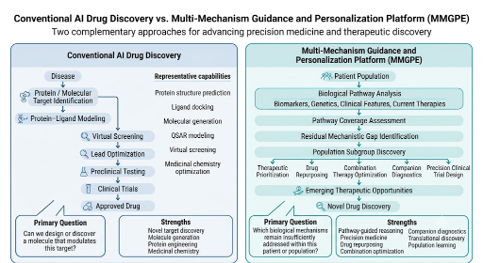
Figure 1 illustrates the difference between standard AI approaches and MMGPE Systems-Level Biological Reasoning. (Larger version of Figure 1 below.)
Note: This paper is public disclosure supporting PCT/US26/36347, filed July 10, 2026 and related Intellectual property tracing back to August 2025.

Related Papers: “Multi-Mechanism Guidance and Personalization Engine (MMGPE): A Framework for Complex Disease Optimization and Pathway-Guided Drug Discovery” https://doi.org/10.5281/zenodo.19712359
“Multi-Mechanism Guidance and Personalization Platform (MMGPE): A Computational Framework for Multi-Pathway Disease Modeling, Therapeutic Prioritization, Precision Medicine, and Translational Drug Discovery” https://doi.org/10.5281/zenodo.21305246
MMGPE: Precision Clinical Trial Enrollment - An Approach to Minimize Phase II and Phase III Clinical Trial Failure https://doi.org/10.5281/zenodo.21313185
One Framework, Many Users: MMGPE Applications Across Pharma, Clinics, Guidelines, and Patients, A Multi-Mechanism Framework for Stakeholders Across Drug Development, Clinical Translation, Trial Design and Precision Medicine https://doi.org/10.5281/zenodo.21313440
MMGPE vs. General-Purpose Biomedical AI Agents: Differentiating Structured Multi-Mechanism Disease Reasoning from Autonomous Biomedical Research Systems https://doi.org/10.5281/zenodo.21313592
MMGPE: Beyond Conventional AI Drug Discovery (Target-Centric AI) https://doi.org/10.5281/zenodo.21313853
Clinical Applications of MMGPE: Illustrative Examples in Alzheimer's Disease/Dementia, Long COVID, ME/CFS, POTS, Systemic Lupus Erythematosus, and Immune-Related Adverse Events https://doi.org/10.5281/zenodo.21314464
Formalizing Mechanism-Based Therapeutic Reasoning: The Clinical Origins of MMGPE https://doi.org/10.5281/zenodo.21314654
The Single-Model Illusion in AI-Driven Drug Discovery: Introducing a Systems-Level Multi-Model Framework for Translational Discovery
1. Introduction
1.1 Limitations of Single-Target Paradigms
Many chronic diseases are traditionally classified using discrete diagnostic categories, yet increasing evidence demonstrates that these conditions arise from complex interactions among numerous biological pathways rather than a single dominant mechanism. Neurodegenerative diseases, autoimmune disorders, inflammatory diseases, cancer, cardiometabolic disorders, and post-infectious syndromes frequently involve dysregulation of multiple overlapping biological processes including immune activation, mitochondrial dysfunction, endothelial injury, oxidative stress, metabolic dysregulation, fibrosis, and tissue-specific cellular dysfunction.
Despite this complexity, therapeutic development and clinical management often remain organized around single molecular targets or individual biological pathways. While this reductionist approach has enabled substantial advances in biomedical research, many patients experience incomplete responses, heterogeneous treatment outcomes, or therapeutic resistance despite receiving therapies directed toward validated molecular targets. Patients sharing the same clinical diagnosis frequently exhibit markedly different biological drivers, suggesting that diagnosis alone may be insufficient to guide optimal therapeutic decision-making.
Similarly, contemporary drug discovery frequently begins with identification of individual molecular targets, protein-ligand interactions, or receptor binding characteristics. Although these approaches have produced numerous successful therapies, they may not fully account for the broader biological context in which diseases emerge or for the substantial mechanistic heterogeneity observed across patient populations.
Collectively, these observations suggest the need for computational frameworks capable of integrating multiple biological pathways, biomarkers, therapeutic mechanisms, and longitudinal clinical information into unified models of disease biology.
1.2 Complex Diseases as Interacting Biological Networks
Rather than existing as isolated molecular abnormalities, many diseases can be conceptualized as interconnected biological networks composed of numerous interacting signaling pathways, cellular processes, and physiological systems. Individual patients may exhibit different combinations of pathway activation despite satisfying identical diagnostic criteria.
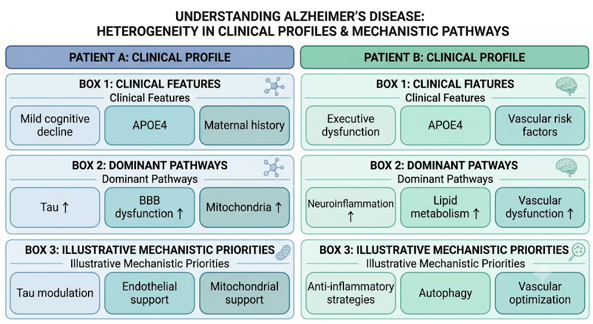
For example, two individuals with Alzheimer's disease may demonstrate distinct dominant biological mechanisms, including tau pathology, neuroinflammation, mitochondrial dysfunction, vascular impairment, or altered lipid metabolism. Similarly, patients with systemic lupus erythematosus may exhibit differing contributions from Type I interferon signaling, B-cell activation, IL-6-mediated inflammation, complement activation, or endothelial dysfunction. Comparable biological heterogeneity has also been described in Long COVID, immune-related adverse events associated with cancer immunotherapy, multiple sclerosis, inflammatory bowel disease, and numerous other chronic disorders.
Accordingly, the present framework views disease not as a singular pathological process but as a dynamic network of interacting biological mechanisms whose relative contributions may differ substantially among individuals and evolve over time.
This systems-level perspective enables computational assessment of pathway activity, therapeutic coverage, residual mechanistic gaps, and opportunities for personalized intervention that extend beyond conventional diagnosis-based treatment paradigms.
1.3 Need for Pathway-Guided Therapeutic Reasoning
Precision medicine has increasingly emphasized biomarker-guided therapeutic selection; however, most current approaches remain focused on relatively small numbers of biomarkers or isolated molecular targets. In contrast, complex diseases frequently require simultaneous consideration of multiple interacting biological mechanisms, therapeutic interventions, safety considerations, and longitudinal patient-specific information.
The Multi-Mechanism Guidance and Personalization Platform (MMGPE) was developed as a computational framework to support this broader systems-level reasoning process. Rather than beginning with a single therapeutic target, MMGPE models diseases as collections of interacting biological pathways, evaluates the extent to which these pathways are currently addressed by existing therapeutic, preventive, diagnostic, or lifestyle interventions, identifies residual mechanistic gaps, and prioritizes opportunities for personalized optimization.
Importantly, MMGPE is intended not only to support individualized therapeutic reasoning but also to facilitate translational research. By aggregating pathway information across populations, the platform may identify recurring biological gaps, discover novel patient subgroups, support companion diagnostic development, optimize combination therapies, prioritize drug repurposing opportunities, guide precision clinical trial design, and identify emerging biological mechanisms that warrant future therapeutic development.
Accordingly, MMGPE represents a computational framework that complements existing molecular AI drug discovery approaches by shifting emphasis from isolated molecular targets toward comprehensive biological pathway coverage within heterogeneous patient populations.
2. The Multi-Mechanism Guidance and Personalization Platform (MMGPE)
2.1 Platform Overview
The Multi-Mechanism Guidance and Personalization Platform (MMGPE) is a computational framework designed to model complex diseases as interconnected biological pathway networks and to facilitate individualized therapeutic reasoning through systematic assessment of pathway activity, therapeutic coverage, and residual mechanistic gaps.
The framework integrates heterogeneous sources of biological and clinical information, including laboratory biomarkers, genomic and ancestry information, clinical characteristics, functional assessments, medical history, therapeutic regimens, scientific literature, and longitudinal outcome data. These diverse inputs are organized into structured disease pathway representations that enable standardized computational analysis across multiple disease categories.
Rather than replacing clinical judgment, MMGPE provides a structured methodology for organizing biological evidence, identifying potential therapeutic opportunities, and supporting hypothesis generation for precision medicine and translational research.
Figure 1 illustrates the difference between standard AI approaches and MMGPE Systems-Level Biological Reasoning.

Figure 2 illustrates an overview of the proposed computational workflow.
2.2 Biological Pathway Representation
At the core of MMGPE is representation of disease as a collection of interacting biological pathways rather than a single molecular abnormality. Each disease may be represented using standardized pathway tables or knowledge graphs that organize relevant biological mechanisms, associated biomarkers, supporting evidence, therapeutic targets, and functional relationships.
Representative pathways may include inflammatory signaling, mitochondrial function, endothelial biology, oxidative stress, fibrosis, immune regulation, metabolic homeostasis, autophagy, cellular senescence, tissue repair, neurodegeneration, vascular dysfunction, and numerous additional biological processes depending upon the disease being modeled.
Pathway representations may be refined using continuously emerging biomedical evidence and adapted to accommodate different diseases, patient populations, or research applications. Although standardized pathway libraries facilitate consistent analysis, the framework remains extensible, allowing incorporation of newly identified biological mechanisms as scientific understanding evolves.
2.3 Knowledge Graphs
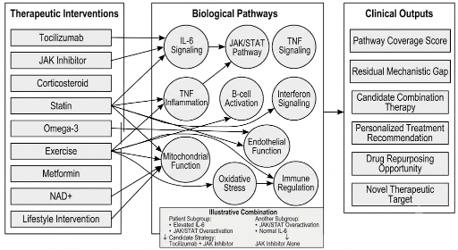
Relationships among biological pathways, biomarkers, therapeutic interventions, molecular targets, clinical outcomes, and scientific evidence may be represented using knowledge graphs or related computational structures.
Within these representations, therapeutic interventions may influence multiple biological pathways simultaneously, while individual pathways may be modulated by multiple therapies. Biomarkers similarly may contribute evidence regarding activity across several interacting mechanisms rather than serving as exclusive indicators of isolated biological processes.
Knowledge graph representations therefore facilitate visualization of complex biological relationships while supporting computational reasoning regarding therapeutic prioritization, pathway interactions, biomarker interpretation, companion diagnostics, and translational drug discovery. Importantly, these graphical representations are intended to evolve continuously as new biomedical evidence becomes available.
Figure 3 – Therapy-to-Pathway Mapping Table / Knowledge Graph
2.4 Therapeutic Coverage Assessment
A distinguishing feature of MMGPE is evaluation of therapeutic coverage across multiple biological pathways.
Rather than asking solely which therapy is appropriate for a given diagnosis, the framework evaluates which biological mechanisms are currently being addressed by an individual's existing therapeutic regimen. Therapeutic coverage may derive from prescription medications, biologics, medical devices, nutritional interventions, lifestyle modifications, rehabilitation programs, behavioral therapies, surgical interventions, or preventive strategies.
Coverage may be quantified qualitatively or quantitatively according to factors including pathway specificity, evidence strength, expected biological effect, patient adherence, therapeutic intensity, safety considerations, and other weighting methodologies.
Visualization of pathway coverage using heatmaps, dashboards, or graphical summaries enables rapid identification of biological mechanisms that are adequately addressed as well as residual gaps that may warrant additional investigation.
2.5 Mechanistic Gap Identification
Following assessment of pathway coverage, MMGPE identifies residual biological mechanisms that remain insufficiently modulated within an individual patient or population.
Mechanistic gap identification serves as the foundation for several downstream applications, including personalized therapeutic optimization, biomarker prioritization, longitudinal monitoring, patient subgroup discovery, companion diagnostic development, combination therapy optimization, drug repurposing, precision clinical trial design, and translational drug discovery.
Importantly, mechanistic gaps are not interpreted as definitive treatment recommendations. Rather, they represent computational hypotheses identifying biological processes that may warrant further clinical evaluation or scientific investigation. As additional longitudinal data become available, pathway weighting, biological interpretations, and therapeutic prioritization may be continuously refined through adaptive learning across individual patients and larger populations.
3. Biological Pathway Coverage and Personalization
3.1 Pathway Weighting
Not all biological pathways contribute equally to disease initiation, progression, or therapeutic response. Accordingly, MMGPE assigns relative weighting to individual biological pathways to facilitate computational prioritization during therapeutic reasoning. Pathway weighting may be determined using one or more factors including published scientific evidence, biomarker abnormalities, genetic predisposition, disease stage, functional impairment, patient-specific clinical characteristics, prior therapeutic response, and longitudinal disease evolution.
Weighting may be implemented using qualitative categories, numerical scoring systems, probabilistic models, machine learning algorithms, expert-derived rules, or combinations thereof.
Because pathway importance may change over time, weighting is not considered static but may be continuously updated as additional biological or clinical information becomes available.
Importantly, pathway weighting does not attempt to identify a single dominant mechanism. Rather, the framework recognizes that multiple interacting pathways frequently contribute simultaneously to disease biology and therefore supports prioritization of combinations of biological mechanisms rather than isolated targets.
3.2 Biomarker Integration
MMGPE integrates diverse biomarker information to estimate biological pathway activity and support pathway-specific therapeutic reasoning. Representative biomarkers may include laboratory analytes, cytokines, inflammatory mediators, imaging findings, genomic information, transcriptomic profiles, proteomic signatures, metabolomic measurements, physiological monitoring, digital biomarkers, and functional clinical assessments.
Rather than interpreting biomarkers independently, MMGPE evaluates biomarker patterns collectively within the context of interconnected biological pathways. Individual biomarkers may contribute evidence regarding multiple biological mechanisms, while multiple biomarkers may collectively strengthen confidence regarding activity within a single pathway.
Biomarker integration therefore supports individualized pathway assessment while accommodating incomplete or evolving datasets commonly encountered in real-world clinical practice.
3.3 Genetics and Ancestry
Genetic variation represents one component of biological heterogeneity and may influence disease susceptibility, pathway activity, therapeutic response, and adverse event risk. MMGPE therefore permits incorporation of genomic information, ancestry-associated risk factors, and pharmacogenomic data into pathway weighting and therapeutic prioritization.
Illustrative genetic inputs may include pathogenic variants, polygenic risk scores, pharmacogenomic markers, HLA alleles, APOE genotype, complement polymorphisms, immune signaling variants, and other inherited factors associated with disease biology. Likewise, ancestry-related population characteristics may contribute to estimation of disease prevalence, biomarker interpretation, or expected pathway activity where supported by scientific evidence.
Importantly, genetic and ancestry information are incorporated as complementary sources of biological evidence rather than deterministic predictors of disease or treatment response. These variables are evaluated alongside biomarkers, clinical characteristics, and longitudinal observations to generate individualized pathway assessments.
3.4 Longitudinal Monitoring
Complex diseases evolve over time, with biological pathway activity frequently changing during disease progression, therapeutic intervention, or environmental exposure. MMGPE therefore supports longitudinal monitoring through repeated assessment of biomarkers, functional measurements, clinical outcomes, therapeutic changes, and other patient-specific information.
Serial analyses enable recalculation of pathway weighting, therapeutic coverage, and residual mechanistic gaps as new data become available. Longitudinal monitoring may further identify emerging biological mechanisms, changing therapeutic priorities, early evidence of treatment response, or progression toward alternative disease phenotypes.
By emphasizing continuous reassessment rather than static decision-making, MMGPE supports adaptive therapeutic reasoning throughout the course of chronic disease management and translational research.
4. Population Learning and Translational Discovery
4.1 Population Analytics
Although individualized therapeutic reasoning represents one important application of MMGPE, aggregation of pathway information across populations enables broader biological discovery. Population-level analyses may identify recurring pathway abnormalities, estimate subgroup prevalence, characterize biomarker distributions, evaluate therapeutic coverage patterns, and monitor changing disease characteristics across diverse patient populations.
Population analytics may be performed within healthcare systems, clinical trials, disease registries, research cohorts, biobanks, decentralized studies, or federated research networks while accommodating heterogeneous clinical data sources.
These analyses transform individual patient observations into collective biological knowledge capable of informing future research and therapeutic development.
4.2 Biological Subgroup Discovery
Patients sharing the same clinical diagnosis frequently exhibit markedly different dominant biological mechanisms. MMGPE therefore supports computational identification of biologically distinct patient subgroups using pathway activity, biomarker profiles, genetic characteristics, therapeutic responses, functional assessments, or other multidimensional biological information.
Unlike conventional subgroup analyses that frequently rely upon demographic or diagnostic classifications, MMGPE emphasizes shared biological mechanisms irrespective of traditional disease boundaries. Consequently, biologically similar patients from different diagnostic categories may exhibit overlapping pathway signatures and potentially benefit from related therapeutic strategies.
Figure 4 – Population Analytics Dashboard / Subgroup Heatmap

Subgroup discovery therefore supports more precise disease classification, biomarker development, therapeutic prioritization, and future clinical investigation.
4.3 Drug Repurposing
Residual mechanistic gaps identified across patient populations may reveal opportunities for repurposing existing therapeutics originally developed for other diseases. Because many approved drugs modulate multiple biological pathways, computational analysis of pathway coverage may identify mechanistically rational applications beyond current regulatory indications.
Rather than relying exclusively upon molecular similarity or target-based screening, MMGPE prioritizes repurposing opportunities according to biological pathway activity observed within patient populations. This systems-level approach complements existing computational drug repurposing methodologies by emphasizing unmet biological mechanisms rather than isolated molecular targets.
4.4 Combination Therapy Optimization
Many complex diseases involve simultaneous dysregulation of multiple biological pathways that may not be adequately addressed by single therapeutic agents. MMGPE therefore supports computational evaluation of combination therapies by assessing complementary pathway coverage, mechanistic redundancy, safety considerations, and potential therapeutic interactions.
Combination optimization seeks to maximize biological pathway coverage while minimizing unnecessary overlap, adverse interactions, and cumulative therapeutic burden. Representative applications include combinations of approved pharmaceuticals, biologics, nutritional interventions, behavioral therapies, medical devices, rehabilitation strategies, preventive measures, or emerging therapeutics.
This framework emphasizes orthogonality among therapeutic mechanisms, recognizing that complementary pathway modulation may provide greater biological benefit than repeated targeting of the same mechanism.
4.5 Companion Diagnostics
Population analyses may identify biomarkers or combinations of biomarkers associated with specific biological pathway profiles, therapeutic response patterns, or emerging patient subgroups. These observations may facilitate development of companion diagnostics capable of identifying patients most likely to benefit from particular therapeutic strategies.
Companion diagnostic development within MMGPE extends beyond prediction of response to individual therapies. Instead, the framework supports comprehensive characterization of biological pathway activity to enable selection among multiple therapeutic options, longitudinal monitoring, adaptive treatment optimization, and future translational research.
4.6 Precision Clinical Trial Design
Biological heterogeneity contributes substantially to variability observed in many clinical trials. MMGPE supports precision clinical trial design by identifying biologically defined patient populations, estimating subgroup prevalence, selecting pathway-specific biomarkers, and prioritizing mechanistically appropriate therapeutic interventions.
Rather than enrolling patients solely according to diagnostic criteria, future clinical studies may leverage pathway-based enrollment strategies to improve biological homogeneity, increase statistical power, facilitate companion diagnostic development, and enhance interpretation of therapeutic response. Furthermore, longitudinal pathway monitoring throughout clinical trials may provide insights into treatment mechanisms, emerging biological adaptations, therapeutic resistance, and opportunities for adaptive trial design.
Figure 5 – Companion Diagnostic + Precision Trial Design

5. Representative Applications
The versatility of the Multi-Mechanism Guidance and Personalization Platform (MMGPE) may be illustrated through application across multiple heterogeneous disease categories. Although the underlying biological pathways differ substantially among these conditions, the computational framework remains fundamentally consistent. MMGPE models disease as interacting biological pathway networks, integrates diverse biological and clinical information, evaluates pathway coverage, identifies residual mechanistic gaps, and supports hypothesis generation for personalized therapeutic prioritization and translational research.
The following representative examples are intended solely to illustrate implementation of the computational framework. They should not be interpreted as comprehensive clinical algorithms or treatment guidelines. Rather, they demonstrate how pathway-guided reasoning may be applied across diverse diseases characterized by biological heterogeneity.
5.1 Alzheimer's Disease
Alzheimer's disease (AD) is increasingly recognized as a multifactorial neurodegenerative disorder involving numerous interacting biological mechanisms rather than a single pathological process. Although amyloid-β and tau pathology remain defining pathological hallmarks, accumulating evidence suggests important contributions from neuroinflammation, mitochondrial dysfunction, oxidative stress, endothelial dysfunction, blood-brain barrier impairment, lipid metabolism, vascular disease, impaired autophagy, and altered cellular senescence.
Within the MMGPE framework, biological information including biomarkers, genetic risk factors such as APOE genotype, ancestry-associated characteristics, imaging findings, functional assessments, and current therapeutic interventions may be integrated to estimate relative pathway activity and identify residual mechanistic gaps. Rather than assuming all individuals with Alzheimer's disease require identical therapeutic approaches, the framework recognizes that different patients may exhibit substantially different dominant biological drivers despite sharing the same clinical diagnosis.
Accordingly, pathway-guided therapeutic prioritization may emphasize different biological mechanisms among individual patients while simultaneously supporting population-level subgroup discovery and translational drug development.
Figure 6. Representative Alzheimer's Disease Pathway Heterogeneity.
5.2 Systemic Lupus Erythematosus
Systemic lupus erythematosus (SLE) provides a representative example of biological heterogeneity within autoimmune disease. Patients meeting identical diagnostic criteria and exhibiting similar laboratory findings, including comparable antinuclear antibody (ANA) titers, may nevertheless demonstrate markedly different dominant biological mechanisms.
Illustrative pathway profiles may include differing contributions from Type I interferon signaling, B-cell activation, IL-6-mediated inflammation, complement activation, endothelial dysfunction, and systemic inflammatory burden. These biological differences may influence pathway prioritization despite substantial overlap in clinical manifestations.
Within MMGPE, pathway-based reasoning facilitates identification of biologically distinct patient subgroups and supports individualized consideration of therapeutic strategies based upon dominant biological mechanisms rather than diagnosis alone. This systems-level approach further supports biomarker discovery, companion diagnostics, and translational research aimed at improving therapeutic precision in heterogeneous autoimmune diseases.
Figure 7. Representative Biological Heterogeneity in Systemic Lupus Erythematosus.

5.3 Long COVID (Post-Acute Sequelae of SARS-CoV-2 Infection)
Long COVID (PASC) represents a recently recognized heterogeneous syndrome characterized by persistent symptoms following acute SARS-CoV-2 infection. Proposed biological mechanisms include persistent immune activation, neuroinflammation, endothelial dysfunction, microvascular injury, mitochondrial impairment, autonomic dysregulation, viral persistence, and tissue-specific inflammatory responses. Individual patients frequently demonstrate substantial variation in dominant symptomatology and biological pathway activity.
Within MMGPE, longitudinal biomarker assessment, functional measurements, clinical history, and pathway modeling may be integrated to identify individualized biological profiles.
Representative patient subgroups may include predominantly neurocognitive phenotypes characterized by neuroinflammation and mitochondrial dysfunction or pulmonary phenotypes associated with persistent endothelial injury and microvascular dysfunction.
These illustrative examples demonstrate how pathway-guided analysis may support hypothesis generation, therapeutic prioritization, subgroup discovery, and future translational research within emerging heterogeneous diseases.
Figure 8. Representative Biological Heterogeneity in Long COVID (PASC).

5.4 Immune-Related Adverse Events During Cancer Immunotherapy
Immune checkpoint inhibitors have transformed cancer treatment but may produce immune-related adverse events (irAEs) affecting diverse organ systems. Although grouped under a common clinical category, irAEs encompass biologically heterogeneous processes involving distinct immune pathways, tissue-specific inflammation, and varying degrees of systemic immune activation.
Illustrative examples include organ-restricted autoimmune thyroiditis, immune-mediated pancreatitis, colitis, pneumonitis, myocarditis, hepatitis, and numerous additional inflammatory syndromes. These conditions differ substantially in dominant biological mechanisms, severity, monitoring requirements, and therapeutic management.
Within the MMGPE framework, pathway-guided analysis may assist in characterizing dominant biological mechanisms underlying individual immune-related toxicities, facilitating more precise biological classification and supporting future development of pathway-guided monitoring strategies, companion diagnostics, and therapeutic optimization.
More broadly, this example illustrates that MMGPE is applicable not only to primary disease management but also to characterization and management of treatment-associated biological responses.
Figure 9. Representative Biological Heterogeneity in Immune-Related Adverse Events.

6. Platform Implementation
The Multi-Mechanism Guidance and Personalization Platform (MMGPE) is intended as a flexible computational framework that may be implemented across a wide spectrum of technological environments. Rather than requiring a specific software architecture, the underlying methodology may be deployed using manual workflows, conventional spreadsheet software, dedicated applications, cloud-based platforms, electronic health record integrations, artificial intelligence-assisted systems, or hybrid implementations that combine multiple computational approaches.
This implementation flexibility facilitates adoption across research laboratories, healthcare systems, pharmaceutical organizations, academic institutions, decentralized clinical studies, and resource-limited environments while preserving a consistent biological reasoning framework.
6.1 Manual Worksheets
The simplest implementation of MMGPE utilizes standardized paper-based worksheets or structured forms to document biological pathways, biomarker findings, current therapies, pathway coverage, and residual mechanistic gaps. Manual implementation allows clinicians and researchers to apply the framework without specialized computational infrastructure while simultaneously establishing standardized methodologies for pathway-guided reasoning.
Although manual implementations require greater user input, they provide an accessible foundation for education, research planning, and early proof-of-concept investigations.
Figure 10. Manual Worksheet

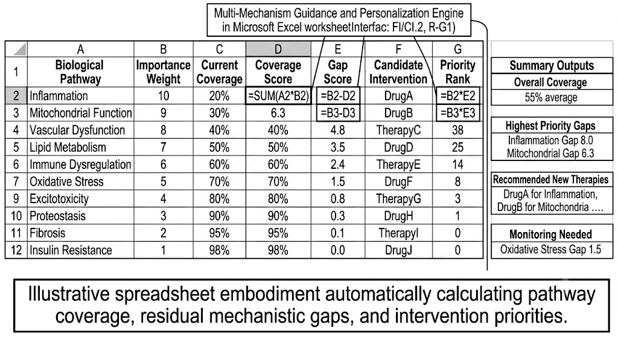
6.2 Spreadsheet ImplementationThe computational methodology may also be implemented within conventional spreadsheet software using formulas, lookup tables, conditional formatting, scoring algorithms, and graphical dashboards. Spreadsheet implementations permit automated calculation of pathway coverage, weighting scores, therapeutic prioritization, and mechanistic gap identification while remaining accessible to users without specialized programming expertise.
This intermediate implementation provides a practical bridge between manual reasoning and fully automated software platforms.
Figure 11. Spreadsheet Version
6.3 Software Dashboards Dedicated software implementations may integrate biological pathway visualization, biomarker interpretation, therapeutic knowledge graphs, population analytics, and longitudinal monitoring within interactive user interfaces. Dashboard-based implementations facilitate rapid interpretation of complex biological information while supporting personalized therapeutic reasoning, population-level analyses, translational research, and adaptive learning.
Illustrative interfaces may include web-based applications, desktop software, mobile platforms, cloud-hosted systems, and electronic health record integrations.
Figure 12 – Illustrative Population Analysis Dashboard

6.4 Artificial Intelligence-Assisted Reasoning
Artificial intelligence may serve as an optional component of MMGPE by assisting with literature synthesis, biomedical knowledge extraction, evidence weighting, hypothesis generation, and computational reasoning. Large language models, retrieval-augmented generation systems, biomedical databases, knowledge graphs, and other computational resources may contribute structured biological evidence while maintaining human oversight during interpretation and therapeutic prioritization.
Importantly, artificial intelligence functions as a decision-support component rather than an autonomous clinical decision-maker. Human experts remain responsible for evaluating biological plausibility, interpreting evidence, and determining the appropriateness of subsequent therapeutic or research decisions.
6.5 Future Command-Line and Cloud-Based Implementations
Future implementations may incorporate command-line interfaces, application programming interfaces (APIs), cloud-native architectures, distributed computing environments, and software development kits to facilitate integration with existing biomedical workflows. Such implementations may support automated literature retrieval, biomarker processing, pathway analysis, longitudinal monitoring, and interoperability with laboratory information systems, electronic health records, wearable devices, and research databases.
These modular architectures enable the underlying computational framework to evolve alongside emerging software technologies while preserving the biological reasoning methodology described herein.
7. Relationship to Existing AI Drug Discovery
Artificial intelligence has transformed numerous aspects of drug discovery, including protein structure prediction, virtual screening, molecular generation, medicinal chemistry optimization, and prediction of protein-ligand interactions. These technologies have substantially accelerated identification of candidate molecules and improved understanding of molecular binding characteristics.
Despite these advances, many contemporary AI drug discovery platforms remain primarily focused on molecular targets rather than the broader biological context within which diseases emerge. Consequently, identification of an effective molecular interaction does not necessarily ensure comprehensive modulation of the multiple biological mechanisms contributing to disease progression in heterogeneous patient populations.
The MMGPE framework complements rather than replaces existing molecular AI methodologies. Instead of beginning with molecular targets, MMGPE begins with patient biology. Diseases are represented as interconnected biological pathway networks whose relative activity may differ substantially among individuals despite identical clinical diagnoses.
By evaluating pathway coverage, identifying residual mechanistic gaps, and aggregating biological information across populations, MMGPE provides a systems-level perspective that may guide therapeutic prioritization, identify opportunities for drug repurposing, optimize combination therapies, support companion diagnostic development, facilitate precision clinical trial design, and prioritize biological mechanisms warranting future therapeutic investigation.
Accordingly, molecular AI and MMGPE may function synergistically within future biomedical research workflows. MMGPE may identify biologically meaningful pathways and patient populations requiring additional therapeutic modulation, while conventional molecular AI approaches may subsequently optimize candidate therapeutics directed toward those prioritized biological mechanisms.
8. Future Directions
The MMGPE framework establishes a computational foundation that may continue to evolve as biomedical data, computational methodologies, and artificial intelligence technologies mature.
Future developments may include digital twin representations capable of continuously modeling individual biological pathway activity using longitudinal biomarker, physiological, genomic, imaging, and behavioral data. Such digital representations may facilitate adaptive therapeutic optimization throughout the course of chronic disease management.
Advances in multi-agent artificial intelligence may further enable independent computational reasoning systems to evaluate biomedical literature, generate competing mechanistic hypotheses, identify areas of agreement or divergence, and support evidence synthesis across rapidly expanding scientific knowledge. These approaches may improve transparency, reduce confirmation bias, and facilitate continual updating of pathway representations.
Federated learning architectures may permit collaborative model development across healthcare institutions while preserving patient privacy and minimizing transfer of identifiable clinical information. Integration of real-world evidence derived from electronic health records, decentralized clinical studies, wearable sensors, patient-reported outcomes, and disease registries may further enhance population learning and refinement of biological pathway models.
More broadly, MMGPE provides a flexible computational framework capable of integrating emerging biological data types, therapeutic modalities, computational algorithms, and digital health technologies while maintaining a consistent systems-level approach to understanding complex disease biology.
9. Conclusion
Complex diseases rarely arise from isolated molecular abnormalities. Rather, they reflect dynamic interactions among multiple biological pathways that vary considerably across individuals, evolve over time, and influence therapeutic response in ways that frequently extend beyond conventional diagnostic classifications.
The Multi-Mechanism Guidance and Personalization Platform (MMGPE) provides a computational framework for modeling these interacting biological networks, integrating heterogeneous biological and clinical information, evaluating therapeutic coverage, identifying residual mechanistic gaps, and supporting pathway-guided therapeutic reasoning across diverse disease categories.
Unlike conventional approaches that focus primarily on individual molecular targets, MMGPE emphasizes comprehensive biological pathway coverage and systems-level understanding of disease heterogeneity. By integrating biomarker interpretation, pathway weighting, population analytics, subgroup discovery, drug repurposing, companion diagnostics, combination therapy optimization, precision clinical trial design, and translational drug discovery within a unified computational framework, MMGPE complements existing precision medicine and molecular AI technologies while providing a broader biological perspective.
Although the representative examples presented herein focus on Alzheimer's disease, systemic lupus erythematosus, Long COVID, and immune-related adverse events, the framework is inherently disease agnostic and may be applied to numerous complex disorders characterized by interacting biological mechanisms. As biomedical knowledge continues to expand, computational frameworks capable of integrating diverse biological evidence into coherent, adaptive, and personalized models may become increasingly important components of precision medicine and translational research.
Note:
The systems, methods, and computational framework described in this technical paper form part of the subject matter disclosed in International Patent Application No. PCT/US26/36347, filed July 10, 2026, entitled Systems, Methods, and Compositions for Multi-Mechanism Disease Analysis, Therapeutic Prioritization, Personalized Intervention, and Translational Drug Discovery. This work is related to and builds upon earlier intellectual property filed by the inventor beginning in August 2025, including U.S. Provisional Applications directed to multi-mechanism disease modeling, therapeutic gap identification, personalized intervention, cognitive hybrid monitoring, therapeutic approaches, and pathway-guided drug discovery.
This paper is also available at:
Related Papers:“Multi-Mechanism Guidance and Personalization Engine (MMGPE): A Framework for Complex Disease Optimization and Pathway-Guided Drug Discovery” https://doi.org/10.5281/zenodo.19712359
“Multi-Mechanism Guidance and Personalization Platform (MMGPE): A Computational Framework for Multi-Pathway Disease Modeling, Therapeutic Prioritization, Precision Medicine, and Translational Drug Discovery” https://doi.org/10.5281/zenodo.21305246
MMGPE: Precision Clinical Trial Enrollment - An Approach to Minimize Phase II and Phase III Clinical Trial Failure https://doi.org/10.5281/zenodo.21313185
One Framework, Many Users: MMGPE Applications Across Pharma, Clinics, Guidelines, and Patients, A Multi-Mechanism Framework for Stakeholders Across Drug Development, Clinical Translation, Trial Design and Precision Medicine https://doi.org/10.5281/zenodo.21313440
MMGPE vs. General-Purpose Biomedical AI Agents: Differentiating Structured Multi-Mechanism Disease Reasoning from Autonomous Biomedical Research Systems https://doi.org/10.5281/zenodo.21313592
MMGPE: Beyond Conventional AI Drug Discovery (Target-Centric AI) https://doi.org/10.5281/zenodo.21313853
Clinical Applications of MMGPE: Illustrative Examples in Alzheimer's Disease/Dementia, Long COVID, ME/CFS, POTS, Systemic Lupus Erythematosus, and Immune-Related Adverse Events https://doi.org/10.5281/zenodo.21314464
Formalizing Mechanism-Based Therapeutic Reasoning: The Clinical Origins of MMGPE https://doi.org/10.5281/zenodo.21314654
The Single-Model Illusion in AI-Driven Drug Discovery: Introducing a Systems-Level Multi-Model Framework for Translational Discovery



Comments