Optical Interaction Dynamics and Multivariable Longitudinal Monitoring for Inferring Biological, Environmental, Ecological, and Therapeutic States
- May 10
- 5 min read
Abstract
Scientific inference of higher-order biological, environmental, ecological, and therapeutic states remains challenging because traditional laboratory methods often rely on isolated analyte measurements that fail to capture dynamic, multivariable, and interaction-driven system behavior. This technical report introduces systems and methods for inferring these states from optical interaction signatures and their temporal dynamics using high-frequency, distributed, and longitudinal monitoring.
Optical interaction data. including Global Edge Coherence (GEC), Localized Edge Dynamics (LEDyn), ΔRadial_Gradient, speckle evolution, aggregation kinetics, and spatial redistribution patterns, are extracted from biological fluids, environmental samples, and other matrices and fused with environmental variables, geospatial data, biologic measurements, and longitudinal multimodal datasets. In certain embodiments, the system processes machine-readable Digital Twin Manifests (DTMs) generated according to related U.S. Patent Application No. 19/672,623 to provide standardized contextual inputs for probabilistic inference engines.
The resulting inference framework supports distributed smartphone-based environmental intelligence, longitudinal biologic monitoring, environmental digital biomarkers, therapeutic-response assessment, and adaptive closed-loop monitoring across laboratory, clinical, ecological, manufacturing, and extraterrestrial applications.
(Public disclosure document: U.S. Nonprovisional Patent Application No. 19/672,674)
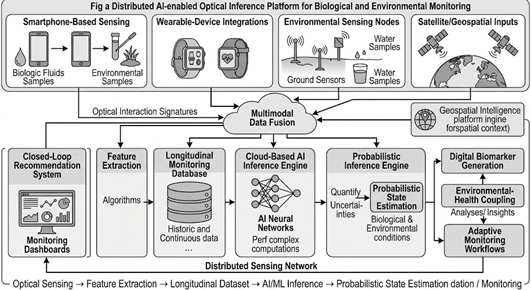
FIG. 1. System architecture for optical interaction-based biological and environmental inference.
1. Introduction
Many biological, environmental, and ecological systems are inherently dynamic, nonlinear, and interaction-driven. Conventional laboratory testing provides isolated snapshot measurements but often fails to capture the temporal evolution, spatial organization, multivariable coupling, and interaction-driven behavior required to understand true system state.
Recent advances in smartphone sensing, wearable devices, distributed environmental monitoring, cloud computing, and AI analytics have dramatically increased data availability, yet robust inference frameworks capable of integrating these heterogeneous data streams remain limited.
This report presents a generalized inference infrastructure that extracts quantitative optical interaction features from image sequences and sensor data, integrates them with longitudinal multimodal datasets, and generates probabilistic estimations of higher-order biological, environmental, ecological, industrial, and therapeutic states. The framework is designed to operate across human, robotic, and distributed sensing platforms and explicitly leverages the reproducible Digital Twin infrastructure described in related U.S. Patent Application No. 19/672,623.
Historically, sparse centralized laboratory workflows limited the ability to generate dense longitudinal environmental or biologic datasets at population scale. Distributed smartphone-enabled sensing architectures may enable substantially higher-frequency geospatial monitoring and discovery of previously unobservable environmental-health relationships, longitudinal exposure trajectories, ecosystem-state transitions, and adaptive biologic responses.
2. Motivation and Conceptual Foundation
Reproducibility and Inference Challenges
Isolated biomarker measurements frequently fail to capture the full context of biological or environmental responses. Many systems exhibit interaction-driven behavior in which aggregation kinetics, spatial redistribution, weathering effects, temporal evolution, and environmental coupling produce higher-order patterns not observable through isolated endpoint measurements alone.
Unlike isolated analyte quantification, optical interaction dynamics may capture emergent system-level behavior arising from aggregation kinetics, particle-surface interactions, environmental weathering, temporal redistribution, and multivariable coupling. These interaction-derived patterns may function as indirect but information-rich proxies for larger biologic, environmental, ecological, industrial, or therapeutic states.
Optical Interaction Signatures and Dynamics
The system defines two foundational concepts:
Optical Interaction Signature: Any measurable optical, spatial, temporal, kinetic, spectral, aggregation-based, texture-based, or interaction-derived pattern.
Optical Interaction Dynamics: The time-dependent evolution of these signatures, quantified via metrics such as Global Edge Clarity (GEC), Localized Edge Dynamics (LEDyn), ΔRadial_Gradient, speckle evolution, radial redistribution patterns, and temporal interaction topology.
These features are extracted in real time and serve as inputs to probabilistic inference models.
Longitudinal Multivariable Monitoring
Longitudinal monitoring may provide substantially greater inferential value than isolated single-timepoint measurements because temporal trajectories, interaction kinetics, adaptive responses, and evolving environmental conditions may reveal higher-order system behavior not observable through static measurements alone.
Repeated distributed measurements further enable probabilistic trend estimation, resilience analysis, adaptive-state transitions, environmental-health coupling analysis, and early identification of biologic or environmental instability before overt failure occurs.
3. System Architecture
The infrastructure comprises five core layers (see FIG. 1):
Multi-modal sensing (smartphone, wearable, laboratory, environmental, industrial, and distributed sensing nodes)
Optical interaction feature extraction and image analysis
Longitudinal multimodal data fusion
AI/ML probabilistic inference engine
Closed-loop adaptive recommendation and monitoring system
FIG. 2. Representative longitudinal monitoring workflow using distributed smartphone-based sensing.

FIG. 3. Correlation framework between optical interaction signatures and biologic or environmental variables.

FIG. 4. AI/ML inference architecture integrating optical signatures, environmental variables, and longitudinal datasets.

4. Integration with Digital Twin Infrastructure
In certain embodiments, the system directly ingests machine-readable Digital Twin Manifests (DTMs) and Reproducibility Index (RI) values generated by the platform described in related U.S. Patent Application No. 19/672,623.
The structured assay context within each DTM, including procedural graphs, environmental vectors, optical metrics (GEC, LEDyn), predicted-versus-observed outcomes, and workflow-state metadata, provides standardized multimodal inputs that may improve the accuracy, interpretability, and reproducibility of higher-order inference systems.
The Digital Twin framework further enables standardized cross-site monitoring, robotic-laboratory integration, longitudinal workflow harmonization, adaptive calibration, and distributed reproducibility analysis across heterogeneous sensing infrastructures.
5. Representative Experimental Data in Biological Matrices
In representative experiments conducted on March 16–17, 2026, optical interaction signatures were evaluated in human urine samples (filtered and unfiltered) using the Baobab assay system in a large-volume (~400 mL) optical-interaction workflow.
Nanoplastic-spiked samples (5 mL Stock A, ~100 nm spheres) produced early speckled optical heterogeneity at approximately 15 minutes and pronounced radial redistribution with central clearing and peripheral concentration at approximately 30 minutes. These structured spatial patterns were distinguishable from both baseline urine and microplastic-spiked samples (~250 MP/L).
Specifically, nanoplastic-spiked samples exhibited elevated Global Edge Clarity (GEC), Localized Edge Dynamics (LEDyn), and ΔRadial_Gradient values compared to baseline urine and microplastic controls.
Unfiltered urine demonstrated greater baseline heterogeneity due to endogenous particulates; however, nanoplastic-associated radial clearing, speckle evolution, and metric shifts remained detectable.
The subject’s simultaneous blood chemistry panel demonstrated normal renal function, including blood urea nitrogen (BUN) of 11 mg/dL and creatinine of 0.91 mg/dL, supporting the interpretation that the observed optical interaction patterns were particle-driven rather than attributable to dehydration or renal dysfunction.
These experiments demonstrate that optical interaction features processed through the Digital Twin infrastructure of related U.S. Patent Application No. 19/672,623 may function as real-time inferential proxies for nanoplastic exposure burden even within complex biological matrices.
6. Applications
6.1 Biological and Therapeutic Monitoring
Optical interaction signatures from urine, blood, saliva, sweat, or wastewater may enable inference of inflammatory burden, exposure burden, oxidative stress, therapeutic response, physiologic adaptation, and longitudinal biologic trajectories (see FIG. 8).
6.2 Environmental and Ecological Intelligence
Distributed smartphone-based sensing may generate dense geospatial datasets supporting inference of ecosystem stress, aquatic health, agricultural productivity, contaminant burden, environmental degradation, and longitudinal environmental trajectories (see FIG. 6 and FIG. 7).
6.3 Closed-Loop Adaptive Monitoring
The infrastructure may support adaptive monitoring systems capable of generating therapeutic recommendations, environmental remediation guidance, monitoring-frequency adaptation, and longitudinal intervention tracking (see FIG. 5).
6.4 Space Medicine and Extraterrestrial Monitoring
The framework may further extend to planetary habitat stability, astronaut physiologic monitoring, atmospheric interaction analysis, and environmental risk assessment within lunar, Martian, orbital, or other extraterrestrial environments (see FIG. 10).
FIG. 5. Representative multimodal environmental-biological intelligence architecture.

7. Future Directions
Future work may incorporate:
federated learning across distributed sensing nodes,
autonomous robotic laboratory integration,
environmental-health coupling databases,
adaptive regulatory audit layers,
longitudinal ecosystem forecasting,
probabilistic resilience modeling,
and large-scale multimodal environmental-biologic intelligence systems.
The infrastructure is designed to evolve into a unified environmental-biological intelligence platform supporting proactive intervention, longitudinal monitoring, distributed sensing, and adaptive resilience analysis across human, environmental, ecological, industrial, and extraterrestrial systems.
8. Conclusion
This report presents a generalized inference framework that transforms optical interaction dynamics and multivariable longitudinal datasets into actionable probabilistic estimations of biological, environmental, ecological, industrial, and therapeutic states.
By integrating optical interaction features, longitudinal multimodal monitoring, Digital Twin infrastructures, and probabilistic AI inference architectures, the framework enables scalable, non-invasive, distributed, and adaptive monitoring across laboratory, clinical, environmental, manufacturing, ecological, and extraterrestrial domains.
The combination of optical interaction signatures, longitudinal datasets, distributed sensing, and probabilistic inference architectures represents a foundational step toward next-generation environmental and biological intelligence systems.
Public Disclosure Statement
This document is intentionally made publicly available for scientific communication and prior-art disclosure purposes in support of related patent filings and associated intellectual property.
Related filing:
U.S. Nonprovisional Patent Application No. 19/672,674“Systems and Methods for Inferring Biological, Environmental, Ecological, and Therapeutic States from Optical Interaction Dynamics and Multivariable Longitudinal Monitoring”Filed May 10, 2026
Solo Inventor: Melinda B. Chu, M.D., M.B.A.



Comments